CGO Ecology Ltd
31 Walkford Road, Christchurch
Dorset BH23 5QD, UK
CGO Ecology Ltd : Blog

- Details
-
By Chris Gleed-Owen
- Category: Invasives and non-natives
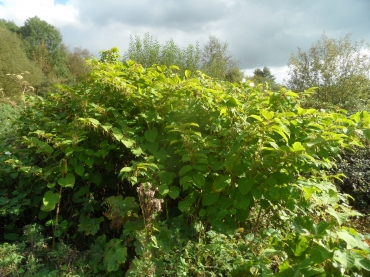
Japanese knotweed (Fallopia japonica) and its sister species, giant knotweed (Fallopia sachalinensis), are the scourge of Britain. Originally introduced in the early 19th century as ornamental and fodder plants, and celebrated for their amazing ability to survive the slopes of active volcanoes in their native Japan, these species have become a nightmare for developers and house-owners alike.
- Details
-
- Category: CGO Ecology news
The last two months have proved very busy for CGO Ecology Ltd. Normally the spring is the busiest season, but the warm autumn in 2011, and a rash of new contracts, has made for a very busy season.
- Details
-
- Category: Survey news
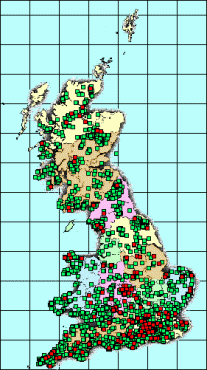
It is encouraging to see that Amphibian and Reptile Conservation's "Add an Adder" recording campaign (www.adder.org.uk) is still going strong after six years. In this time it has gathered well over 4,000 records of adder sightings - past and present - from members of the public. The website shows a map of recent adder sightings (green dots) and those that are probably now extinct (red dots).
- Details
-
- Category: Publications
Hot off the press, Natural England has just published its much-anticipated "Reptile Mitigation Guidelines".
- Details
-
- Category: Publications
The Institute of Ecology and Environmental Management (IEEM) has just published a set of guidance notes to advise wildlife surveyors and other practitioners on the skills needed for species surveys. The new notes - called “Competencies for Species Survey (CSS) Guidance" - have been a year in the making, and are the result of consultation with practitioners, conservation NGOs and SNCOs.
Page 26 of 35
We get the job done to an excellent standard, in the timescale we predicted, at the price we quoted.